

INTRODUCTION:
One strategy to increase the number of people who visit your website via search engines like Google is still search engine optimization, or SEO. Many companies invest a lot of time and resources on SEO without seeing the desired outcomes. They create SEO errors that prevent their websites from ranking better.
Even little SEO mistakes can have a big influence on your website’s success in the modern internet age. Knowing these errors can help you raise your website’s rating and draw in more targeted visitors, whether you are a marketer, business owner, or website administrator.
1. Ignoring Keyword Research
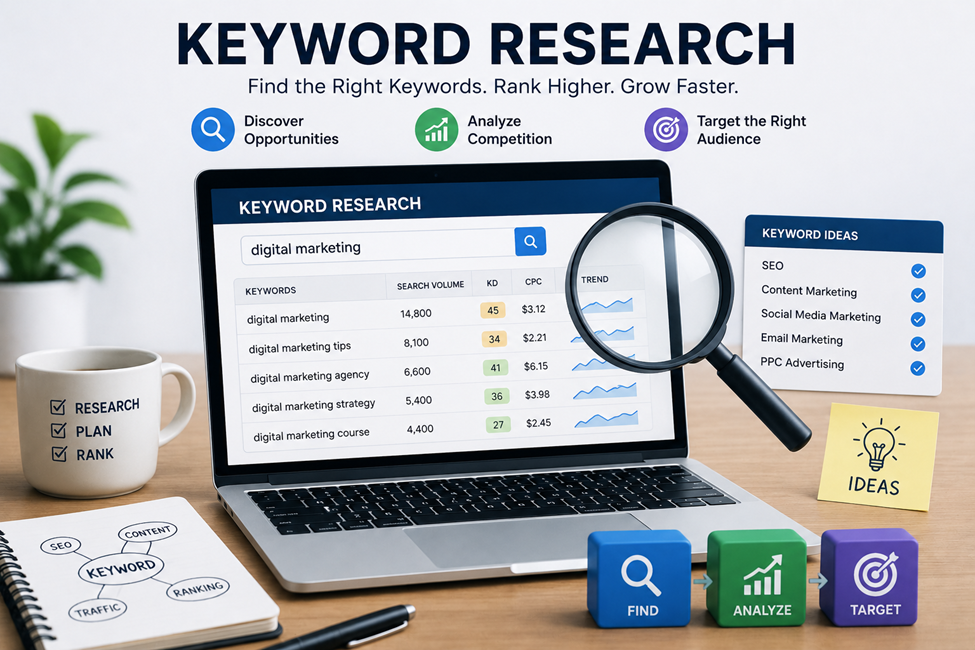
Any effective SEO plan starts with keyword research, yet many website owners produce content without knowing what their target audience is truly looking for. Because of this, they focus on phrases that have low search demand or fierce competition, making it challenging to rank. Finding useful search phrases, user intent, and ranking opportunities are all aided by thorough keyword research. It guarantees that your content is in line with what prospective clients are searching for on the internet. Even well-written content might not produce organic traffic and leads without conducting keyword research.
Why It Hurts Rankings ?
Your content can focus on subjects that people are not actively looking for if you do not conduct adequate keyword research. This lessens the likelihood that you will show up in pertinent search results and draw in targeted visitors. Additionally, it may result in the waste of time and money producing content that has little to no organic visibility. Your lead generation efforts and overall SEO performance may suffer as a result.
How to Fix It ?
Use keyword research tools like Google Keyword Planner, Ahrefs, SEMrush or Ubersuggest to find:
- High-volume keywords
- Long-tail keywords
- User search intent
- Low-competition opportunities
## Focus on keywords that match your audiences needs and business goals.
2. Targeting the Wrong Search Intent
Targeting keywords is only one aspect of SEO, another is figuring out why people are looking for them. The purpose of a search query, whether it be for information, product comparisons, or a particular service, is referred to as search intent. For instance, a person looking for “best SEO tools” anticipates suggestions rather than a sales page. Google is unlikely to give your content a high ranking if it does not live up to user expectations. Rankings, user engagement, and general SEO performance can all be enhanced by comprehending and matching search intent.
Common Example
When a person searches for “Best SEO tools,” they are looking for suggestions rather than a sales page advertising your offerings.
Why It Hurts Rankings ?
Giving users the most relevant result for their query is Google’s main objective. Search engines may give competitor pages a higher ranking if your content does not match what visitors are genuinely looking for. When a service site is ranked for an informational keyword, for instance, visitors may not find the information they were looking for, which can result in high bounce rates and low engagement. These unfavorable user signals alert Google to the fact that your page is not meeting search intent, which can progressively lower ranks.
How to Fix It ?
Analyze the top-ranking pages for your target keyword and identify whether users want:
- Informational content
- Commercial investigations
- Product comparisons
- Service pages
- Tutorials
## Create content that directly addresses that intent.
3. Publishing Low-Quality or Thin Content
Content that offers users genuine value is given priority by Google. Thin content frequently has trouble ranking in search results because it provides little information or is shallow. Many websites include brief articles with general information that do not adequately address visitors’ inquiries. Informative, well-organized, and offering useful insights or solutions are characteristics of high-quality material. It should exhibit proficiency and cover the subject in detail. Investing in high-quality content increases your audience’s trust and authority while also improving rankings.
Signs of Thin Content
- Less than 300 words
- Duplicate information
- Poor readability
- Lack of expertise
Why It Hurts Rankings ?
Low-quality material frequently falls short of providing relevant answers to users queries. Because of this, users immediately depart from the page and look elsewhere for better information. Thin material usually finds it difficult to compete with comprehensive resources since Google rates content based on relevancy, usefulness, and user pleasure. Low-value content can also reduce the overall authority of your website, which makes it more difficult for other pages to rank well in search results.
How to Fix It ?
Create content that:
- Solves user problems
- Includes practical examples
- Answers common questions
- Demonstrates expertise
- Provides actionable insights
## Quality always beats quantity.
4. Neglecting On-Page SEO
If fundamental on-page SEO components are not optimized, even the best content may find it difficult to rank. Title tags, meta descriptions, headings, alt text for images, internal links, and URL structure are all part of on-page SEO. These components aid search engines in comprehending the context and applicability of your material. Visibility and click-through rates can be lowered by missing or inadequately optimized on-page elements. Search engine rankings and user experience are both enhanced by a well-optimized page. Long-term SEO success requires consistent on-page improvement.
Common On-Page SEO Errors :
- Missing title tags
- Duplicate meta descriptions
- Improper heading structure
- Missing image alt text
- Keyword stuffing
How to Fix It ?
Optimize:
- Title tags
- Meta descriptions
- H1, H2 and H3 headings
- Internal links
- Image alt attributes
- URL structure
##Ensure every page follows SEO best practices.
5. Ignoring Mobile Optimization
Since most people use mobile devices to browse the internet, mobile optimization is becoming a crucial ranking element. When deciding rankings, Google primarily considers the mobile version of your website because it employs mobile-first indexing. Users are likely to quit your website fast if it is hard to use, takes a long time to load, or has a poor mobile design. This has an adverse effect on SEO performance and raises bounce rates. A mobile-friendly, responsive website enhances search visibility and offers a better user experience.
Why It Hurts Rankings ?
The performance of your website can be greatly impacted by a poor mobile experience, since most online searches now take place on mobile devices. Users are likely to abandon your website before engaging with your content if it loads slowly, displays poorly, or is challenging to use on smartphones. Google primarily considers the mobile version of your website when evaluating rankings because it employs mobile-first indexing. In the end, a poorly designed mobile experience can have an impact on traffic and conversions by increasing bounce rates, decreasing engagement, and decreasing visibility in search results.
Common Mobile Issues
- Slow loading speed
- Unresponsive design
- Tiny text
- Difficult navigation
How to Fix It ?
- Use responsive design
- Improve mobile page speed
- Optimize images
- Simplify navigation
- Test pages on multiple devices
## A mobile-friendly website improves both rankings and user experience.
6. Slow Website Speed
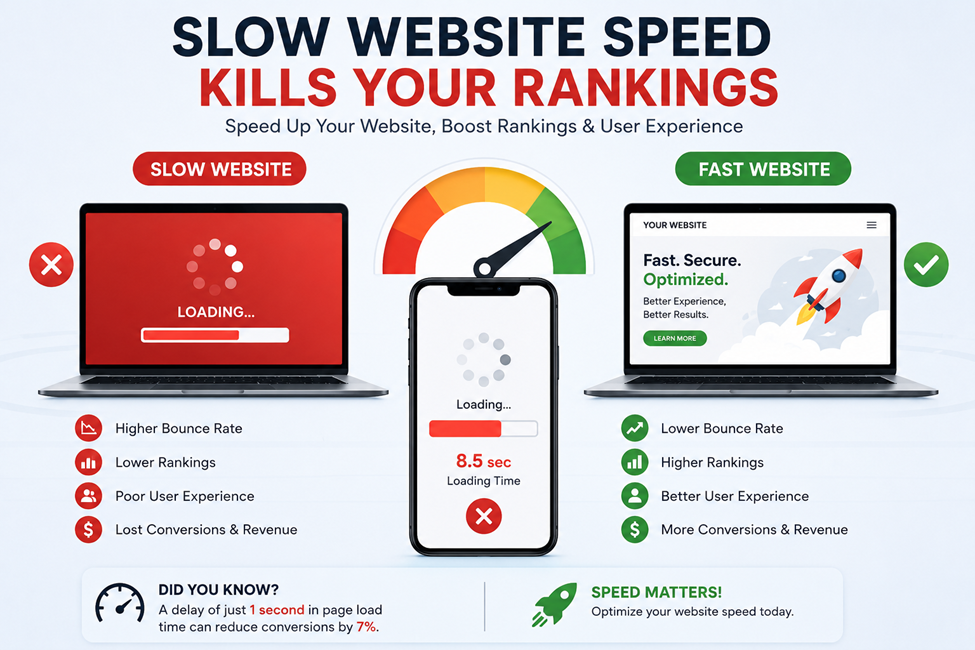
Both user experience and search rankings are significantly impacted by a website’s speed. Delays frequently cause visitors to leave before the page loads completely because modern users expect websites to load in a matter of seconds. Generally speaking, slow websites have poorer engagement, greater bounce rates, and fewer conversions. Large picture files, subpar hosting, and unoptimized code are common causes. Increasing the speed of a website not only increases consumer pleasure but also communicates favorably to search engines. Websites that are faster are more likely to rank higher and produce better outcomes.
Why It Hurts Rankings ?
Even a few seconds of delay might raise desertion rates since users want websites to load promptly. Pages that load slowly provide a bad user experience and frequently result in decreased levels of engagement. Because page speed affects overall usability, Google views it as a significant ranking factor. Because of this, slow websites could find it difficult to compete with rivals that are speedier and more optimized.
Common Causes
- Large image files
- Excessive plugins
- Poor hosting
- Unoptimized code
How to Fix It ?
- Compress images
- Enable browser caching
- Use a CDN
- Minify CSS and JavaScript
- Upgrade hosting when necessary
## Tools like Google PageSpeed Insights can help identify performance issues.
7. Poor Internal Linking Structure
Internal linking directs consumers to pertinent content while assisting search engines in comprehending the relationships between pages on your website. Important pages may get less authority and visibility in the absence of an effective internal linking strategy. Inadequate internal linking can also hinder search engines’ ability to efficiently crawl and index content. Strategic internal links spread link equity throughout your website, enhance navigation, and lengthen time on site. Both higher rankings and a better user experience are enhanced by a robust internal connecting structure.
Why It Hurts Rankings ?
Without internal linking:
- Important pages may remain undiscovered
- Link equity is wasted
- User navigation becomes difficult
How to Fix It ?
Create strategic internal links between:
- Related blog posts
- Service pages
- Product pages
- Resource content
## Use descriptive anchor text rather than generic phrases like “click here.”
8. Not Optimizing for AI Search and Featured Results
In order to respond to user inquiries, search engines are increasingly utilizing AI-powered features like Google AI Overviews and highlighted snippets. Websites may lose important visibility if they do not optimize for various search experiences. Content should have a clear structure, directly address questions, and use components like schema markup and FAQs. Content that is thorough, reliable, and simple to comprehend is preferred by AI systems. In addition to increasing visibility in new search formats, AI search optimization boosts overall SEO effectiveness.
Why It Hurts Rankings ?
Websites that do not change could become less visible as search engines depend more and more on AI-generated responses. AI-powered results are less likely to include content that lacks organization, concise responses, or auxiliary components like FAQs. Ignoring these chances can lower organic exposure and traffic. Future-proofing your SEO approach can be achieved by optimizing for AI search.
How to Fix It ?
Focus on:
- Clear content structure
- FAQ sections
- Schema markup
- Entity-based SEO
- Comprehensive answers
## This approach improves visibility in both AI-powered search results.
9. Ignoring Technical SEO Issues
Technical SEO guarantees that your website can be correctly crawled, indexed, and understood by search engines. Issues such as broken links, duplicate content, crawl errors, and missing sitemaps can significantly impact rankings. Many companies ignore technical issues that keep search engines from accessing crucial pages in favor of concentrating only on content. Frequent technical audits assist in locating and fixing these problems before they have an impact on performance. To maximize the success of all other SEO initiatives, a solid technological foundation is necessary.
Common Technical Problems
- Broken links
- Crawl errors
- Duplicate content
- Missing XML sitemaps
- Improper redirects
Why It Hurts Rankings ?
Search engines may be unable to properly crawl, index, and comprehend your website due to technical SEO issues. Important pages may be missed due to problems like broken links, duplicate content, or crawl failures. If search engines are unable to effectively access content, even exceptional content will not rank well. Strong search performance requires frequent technical maintenance.
How to Fix It ?
Conduct regular SEO audits and monitor:
- Google Search Console
- Crawl reports
- Index coverage
- Website health
## Address technical issues before they impact rankings.
10. Not Tracking SEO Performance
SEO is a continual process that calls for constant observation and development. Many companies spend money on SEO but neglect to monitor important performance indicators like rankings, organic traffic, and conversions. It is impossible to identify techniques that are effective and areas that require improvement without data. Google Analytics and Google Search Console are two tools that offer useful information about the performance of websites. Businesses may improve long-term outcomes and make well-informed decisions by routinely evaluating SEO data. To maximize the return on investment from SEO initiatives, performance tracking is crucial.
Why It Hurts Rankings ?
Without data you cannot:
- Identify what’s working
- Detect ranking drops
- Improve content performance
- Measure ROI
How to Fix It ?
Track Key metrics such as:
- Organic traffic
- Keyword rankings
- Click-through rates
- Bounce rates
- Conversion rates
Use tools like:
- Google Analytics
- Google Search Console
- Ahrefs
- SEMrush
## Data-driven decisions lead to better SEO outcomes.
★ Bonus Tip: Avoid Keyword Stuffing
Years ago repeatedly inserting keywords could boost rankings. These days, it can have the opposite effect. Overusing keywords in an effort to rank higher is one of the most frequent SEO errors. Although keywords are crucial, stuffing them into every sentence might make the text seem awkward and challenging to read. Google’s algorithms are intelligent enough to comprehend related phrases and context. Instead of overusing the same term, concentrate on producing insightful content that organically includes your target keywords. In the long term, a user-friendly strategy always works better.
Example of Keyword Stuffing
“SEO services are the SEO services because our SEO services provide SEO services.”
Better Approach
Write naturally and focus on providing value. Use keywords strategically without compromising readability.
CONCLUSIONS:
SEO success isn’t just about implementing the latest tactics – it’s about avoiding the mistakes that silently damage your rankings. By addressing these SEO issues you can improve your websites visibility attract more qualified traffic and achieve long-term growth.
The search landscape continues to evolve with AI-powered search experiences making it more important to focus on quality content, technical excellence, user experience and search intent.
If your website isn’t achieving the rankings you expect start by auditing these 10 SEO mistakes. Fixing even a few of them can lead to improvements, in organic performance.
Need SEO Assistance?
At Ridhaan Technology we help businesses improve search visibility through data-driven SEO strategies, technical optimization, content marketing and AI-ready search optimization. Contact our team today to discover how we can help your website rank higher and generate leads.